Pay by Phone Casinos Australia: Payment Methods
 Available in AU

PayID uses a mobile number or email to route a bank payment through the NPP; it does not add the deposit to a phone bill.
Table of Contents
- Paying from a mobile: what happens after you choose a payment method
- How to tell whether a deposit method is actually supported
- PayID casino payments: the Australian mechanism
- Assessing payment and bonus terms without assuming a phone-bill offer
- No-wagering and no-deposit offers: what the available evidence can support
- Payment references, pending deposits and account checks
- Depositing and withdrawing: why the same method may not work both ways
- Online payment timing: the network is not the only clock
- PayID is not a credit-card payment
- Free spins and credit offers: check the conditions before accepting
- Payments
Paying from a mobile: what happens after you choose a payment method
“Pay by phone” can describe two different things. A phone-bill payment charges a purchase to your mobile account, while a mobile banking payment is authorised through an app linked to your bank account. PayID belongs to the second category: it uses a payment identifier, such as a mobile number or email address, to route a bank payment through the New Payments Platform (NPP). The fact that a mobile number can serve as an identifier does not mean the payment is added to your phone bill.
That distinction matters when you are reading about mobile casino payments. A page or cashier that refers to using a phone does not, by that wording alone, establish that the charge will appear on a mobile bill. With PayID, the phone is the device you use to access your banking app, or the number may be the identifier for a bank account. The funds still move as a bank payment.
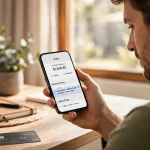
In a PayID deposit flow, you first choose PayID as the payment method in the cashier. You then enter the amount you intend to send. The next action is in your banking app: you review and confirm the payment there. In practical terms, selecting the method begins the process, but it does not itself send money. The banking-app confirmation is the step that authorises the transfer.
If you’re looking at pay-by-phone casinos in Australia, check the available payment methods and terms before choosing a site. This list gives you a starting point, but the details provided do not confirm which operators accept phone payments.
1. 7Bit Casino
License: Curacao, operated by Dama N.V. 7Bit Casino is listed as licensed in Curaçao and operated by Dama N.V. You’ll need to check its payment options directly, as no phone-payment details are provided here.
2. Bizzo Casino
License: Curacao Gaming Control Board (TechSolutions Group N.V.) Bizzo Casino is listed under the Curaçao Gaming Control Board, with TechSolutions Group N.V. named as its operator. No phone-payment information is provided, so check directly if that method matters to you.
3. House of Pokies
License: international iGaming licence – jurisdiction not named in the source · Payout speed: PayID 1-24 hours · Min. deposit: A$30 (PayID from A$10) House of Pokies lists PayID payouts of 1–24 hours and a A$30 minimum deposit, with PayID deposits from A$10. Its licence is described as international, but the jurisdiction is not named; phone-payment availability is not specified.
4. LuckyVibe
License: Curacao Gaming Control Board OGL/2023/176/0095 (Hollycorn N.V.) LuckyVibe is listed with Curaçao Gaming Control Board licence OGL/2023/176/0095, held by Hollycorn N.V. You’ll need to verify whether it offers phone payments, as that information is not provided.
5. Roby Casino
License: Curacao eGaming (Roby Games Ltd) Roby Casino is listed as licensed by Curaçao eGaming, with Roby Games Ltd named as its operator. No phone-payment details are available here, so check the cashier directly.
6. Kingmaker
Payout speed: crypto ~90 minutes, fiat 1-5 days · Min. deposit: A$30 Kingmaker lists crypto payouts at about 90 minutes and fiat payouts in 1–5 days, with a A$30 minimum deposit. The available details do not say whether you can pay by phone.
7. Golden Pokies
License: Curacao Golden Pokies is listed as licensed in Curaçao. No payment methods or other operator details are provided, so you’ll need to check directly whether phone payments are available.
8. GoldenCrown
License: Curacao Gaming Control Board OGL/2023/176/0095 (Hollycorn N.V.) GoldenCrown is listed with Curaçao Gaming Control Board licence OGL/2023/176/0095, held by Hollycorn N.V. Phone-payment availability is not specified in the available information.
9. SpinsUp
License: Curacao Gaming Control Board OGL/2023/174/0082 (Dama N.V.) SpinsUp is listed with Curaçao Gaming Control Board licence OGL/2023/174/0082, held by Dama N.V. The provided details don’t confirm whether you can use phone payments.
10. JustCasino
License: Curacao Gaming Control Board JustCasino is listed as licensed by the Curaçao Gaming Control Board. No payment details are provided, so check with the casino to see whether it supports phone payments.
This sequence is useful to understand before acting on a mobile screen. The cashier provides the payment route; your bank app is where you confirm the transaction. If you stop before confirming in the app, you have not completed that authorisation. If you do confirm, you have initiated a bank payment rather than a charge to your mobile service. Keep those stages separate when checking what has happened: choosing PayID, entering an amount and confirming are distinct actions.
PayID’s use of a familiar identifier can make the process look like a phone-based payment, but the identifier is not the source of the money. It tells the payment system how to address a transfer. The funds come through the bank account connected to the payment, and the bank app is where you approve it. So “mobile payment” describes the device and interface; it does not necessarily describe a billing method.
The phrase “online casino pay by phone” can therefore be ambiguous. It might refer to a service that bills a mobile account, or it might be used loosely for a deposit made on a phone using a bank payment method. Those are not interchangeable. If a payment method is PayID, the relevant flow is banking-app authorisation. A phone-bill charge would be a different arrangement and should not be inferred merely because the payment is made on a mobile device.
The same distinction applies to searches for mobile pokies or online slots that can be paid for by phone. The wording may combine the game, the device and the payment method, but those are separate parts of a transaction. Playing on a phone does not determine how a deposit is funded. Nor does a mobile number used as a PayID identifier turn a bank transfer into a phone-bill payment. The payment route is identified by the method selected and the action required to authorise it.
Best-paying online pokies in Australia: key facts
There is also a legal boundary in Australia. The Interactive Gambling Act 2001 prohibits operators from providing real-money online casino games, including pokies and table games, to people physically located in Australia. This includes casino-style games offered through a mobile browser or app. Describing how a PayID transaction is initiated does not change that restriction or make a real-money casino service lawful to provide in Australia.
For understanding the mechanics, focus on where the confirmation occurs and what account funds the payment. With PayID, you select the method, enter the intended amount, and confirm through your banking app. That is a bank-account payment made from a mobile interface—not a phone-bill charge. A mobile screen can host several kinds of payment flow, so the device alone is not enough to identify which one is being used.
How to tell whether a deposit method is actually supported
A payment name in a cashier is only useful if you can identify what happens when you select it. “Pay by phone” can describe payment initiated on a phone, or a charge billed to a mobile account. Those are different arrangements. A PayID option is a bank payment: you initiate it through your banking app. The fact that you can use a phone to make that transfer does not make it phone-bill billing.
Legal Restriction
The Interactive Gambling Act 2001 makes it illegal for operators to provide real-money online casino games to people physically located in Australia.
For people in Australia, that distinction matters beyond terminology. The Interactive Gambling Act 2001 makes it illegal for operators to provide real-money online casino games to people physically located in Australia. A cashier label does not change that legal position. Do not treat a payment option as an invitation or confirmation that an online casino may lawfully provide its services to you.
Read the method name and its instructions together
Start with the cashier’s exact method name, then open its accompanying instructions before entering payment details. If it says PayID and directs you to use a banking app, the described transaction is a bank payment. PayID uses an identifier, such as a mobile number or email address, to send or receive money through Australia’s payment infrastructure. It does not, by itself, mean the amount will be added to a phone bill.
A phone-bill payment would need to be described as such, with clear information about how the charge is authorised and where it will appear. A mobile-friendly page, a phone-number field, or the words “mobile payment” alone do not establish that the charge goes through a telecommunications account. Look for the actual payment route, not just wording that mentions a phone.
Safe Online Pokies Australia: Offshore Risks
The same test applies to other cashier labels. A bank-payment option should identify a bank transfer or payment process; a card option should identify a card transaction. If the instructions shift from one type of payment to another, or do not explain who receives the money and how you authorise it, the label is not enough to establish what you are being asked to do.
Check what the next step requires
Before taking any action, inspect the full sequence shown for the method. A PayID process should make clear that you select PayID, enter an amount, and confirm the transfer through your banking app. The payment is initiated from your bank account; it is not authorised by simply entering a mobile number on a casino page.
A PayID transfer can reach a casino within seconds, but speed does not identify the payment type or establish that the service is appropriate to use. The key distinction is the source of the funds and the authorisation route: a banking app points to a bank payment, while a phone-bill charge would need its own explicit billing terms. Do not infer one from the other.
If a cashier calls something “pay by phone” but then instructs you to open a banking app, treat the instructions as describing a bank payment, not a phone-bill deposit. If it asks for a mobile number but gives no clear explanation of the charge, do not assume the number is being used as a PayID identifier or as a billing account. Stop rather than supplying details you cannot identify.
Do
- Read the exact method name and instructions
- Verify the source of funds and authorisation route
- Inspect the full sequence of required steps
Don’t
- Rely on a logo or generic “mobile deposits” claim
- Assume a mobile number field implies phone-bill billing
- Continue if payment instructions are inconsistent
Do not rely on a logo or a generic claim
A payment logo, a broad “mobile deposits” heading, or a statement that deposits are supported does not show how a particular transaction works. The useful information is the method-specific explanation presented before payment: whether it uses PayID, a card, a bank transfer, or another clearly identified route; where you must approve it; and what account or service is charged.
Also distinguish a method being displayed from a transaction being completed. A cashier may show an option, but the payment instructions must still match that option. If the available steps are inconsistent, or the stated method changes during the process, do not continue on the assumption that the original label remains accurate.
A practical classification
Use the cashier’s instructions to classify the payment, rather than the device you happen to be using:
- PayID: a bank payment initiated and confirmed in a banking app using a PayID identifier.
- Phone-bill billing: a charge explicitly authorised through a mobile account and identified as appearing on a phone bill or mobile account statement.
- Unclear wording: a label such as “mobile deposit” without enough detail to identify the payment route.
These categories should not be collapsed into one. PayID’s use of a mobile number as an identifier does not turn it into carrier billing, and using a phone to access a cashier does not make every payment a phone payment. Where the method cannot be identified from its instructions, there is no reliable basis for treating it as supported in the sense you intend.
PayID casino payments: the Australian mechanism
PayID is a way to address a bank payment using an identifier, such as a mobile number or email address, rather than entering conventional account details. It is a payment service operating through Australia’s New Payments Platform (NPP). The identifier gives the payment a destination; the NPP carries the transaction between participating financial institutions.
That distinction matters when “pay by phone” appears in a payment description. PayID can use a mobile number as an identifier, but that does not make it a charge to your phone bill. The payment is initiated from a bank account through a banking app. A phone number may identify where the bank payment should go; it does not change the underlying payment rail into carrier billing.
Bitcoin Pokies in Australia: Payments and Credits
In a PayID transfer, the identifier is associated with a recipient’s account. The payer uses that identifier to address a payment, and the banking system processes it through the NPP. In a casino-payment context, the casino would need to provide a PayID destination for the transfer. The presence of PayID in a general list of payment methods does not, by itself, show that a particular service accepts it or that the payment is a phone-bill transaction.
The NPP is designed to settle PayID transactions in real time. A transfer can clear within minutes after it is released, but settlement describes the movement of money between payment accounts. It does not determine whether a separate service recognises or credits a payment. A recipient’s internal handling can remain a distinct step. This is why “real-time payment” should not be read as a promise that every related account update happens at the same moment.
PayID is also not a separate balance or a credit facility. It provides an address for a bank payment, while the underlying funds come from the payer’s bank account. The identifier simplifies how a recipient is addressed; it does not remove the bank’s role in authorising and processing the transfer.
The phrase “pay by phone casino” can therefore refer to different things in ordinary usage. It might mean using a phone to access a banking app and send a PayID payment, or it might suggest adding a charge to a mobile-phone account. Those are not the same mechanism. PayID supports bank-account payments through the NPP; describing it as phone-bill billing would misstate how it works.
PayID Transfer Process
Step 1: Method Selection
Choose PayID as the payment method in the casino cashier.
Step 2: Amount Entry
Enter the specific amount you intend to deposit.
Step 3: Banking Authorisation
Open your banking app to review and confirm the transaction to complete the transfer.
There is also an important Australian legal boundary. Under the Interactive Gambling Act 2001, it is illegal for operators to provide real-money online casino games, including pokies and table games, to people physically located in Australia. Explaining the operation of a payment rail does not make such a service lawful or establish that a casino payment is available to Australian residents.
For that reason, PayID should be understood here as a banking mechanism, not as evidence that a real-money casino service is permitted or accessible in Australia. The key technical point is simple: an identifier addresses the recipient, the bank authorises the payment, and the NPP carries and settles it. A phone number may be the identifier, but the funds still move as a bank payment—not as a charge on a mobile-phone bill.
Assessing payment and bonus terms without assuming a phone-bill offer
A promotion attached to a deposit is a set of conditions, not simply extra money added to your balance. Before treating an offer as usable, identify what triggers it, which funds it applies to and what must happen before any resulting winnings can be withdrawn. A reference to paying by phone does not, by itself, show that a casino accepts charges to a mobile phone bill. Nor does it establish that a particular payment method qualifies for a promotion.
For people in Australia, there is an important legal limit: the Interactive Gambling Act 2001 prohibits operators from providing real-money online casino games, including pokies, to people physically located in the country. Information about promotion terms should not be read as a recommendation to use an online casino.
Read each condition as a rule
Wagering requirements specify how much qualifying play must occur before bonus-related funds or winnings can be withdrawn. Check whether the requirement applies to the bonus, the deposit, or both, and how the operator calculates qualifying play. A headline offer can appear generous while its release conditions make the balance difficult to use.
Maximum bet limits set a ceiling on the size of a wager while a promotion is active. Check when the restriction begins and ends, and whether exceeding it can affect eligibility or the amount you may withdraw. Do not assume the limit applies only to bonus funds: the written terms determine its scope.
Game weighting describes whether different games contribute differently towards a wagering requirement. If some games count less, or do not count at all, play on them may make little or no progress towards meeting the condition. Look for the specific game categories and the stated contribution rules rather than assuming that every game counts equally.
Time limits define how long you have to meet the promotion’s conditions. Find out when the period starts, what event ends it, and what the terms say happens to unused bonus funds when time expires. If the start point is unclear, the practical deadline is unclear too.
Maximum cash-out conditions can limit the amount withdrawable from a promotion, even after its other requirements are met. Check whether a cap applies to winnings, bonus-derived funds or the overall withdrawal, and whether the terms explain how the cap is applied.
Wagering Requirements
Conditions specifying how much qualifying play must occur before funds or winnings can be withdrawn.
Maximum Bet Limits
Ceilings on the size of a wager allowed while a promotion is active.
Game Weighting
Rules determining how different games contribute towards meeting a wagering requirement.
Time Limits
Defined periods within which the promotion’s conditions must be met.
Separate payment eligibility from promotion conditions
A deposit method and a promotion are separate parts of the transaction. The cashier’s payment options indicate what the operator presents for deposits; promotion terms determine whether a deposit qualifies and what restrictions follow. Read both sets of information before taking any action. A phone-bill claim should not be inferred from wording about mobile use: paying through a banking app on a phone is not the same as billing a casino deposit to your phone account.
If you are considering PayID, the amount you can send is controlled by your bank, and limits vary between banks. That bank limit does not explain the promotion’s wagering rules, bet restrictions, game weighting, expiry or cash-out conditions. Treat each as a separate constraint, and do not rely on a headline or short promotional description where the detailed terms determine the outcome.
No-wagering and no-deposit offers: what the available evidence can support
“No wagering” and “no deposit” describe different promotion conditions. A no-wagering label suggests that a stated reward is not subject to a wagering requirement; a no-deposit label suggests that the offer does not require an initial deposit. Neither label, by itself, establishes that an offer exists, who can access it, or which payment methods are involved.
Those conditions are separate from how a payment is made. PayID is a bank-payment method, not a bonus category. A phone-bill charge is a different payment arrangement, and a page mentioning it does not show that the casino accepts it. The same applies to Boku or another named billing service: a reference to a service is not proof that it can fund an account or that it is linked to a promotion. Do not treat “pay by phone” as interchangeable with paying through a banking app.
The key distinction is between an offer’s eligibility rules and its payment mechanics. A promotion might describe a deposit requirement, a wagering condition, or an expiry rule; a cashier separately shows which payment options are available. Neither screen should be used to infer information that it does not state. In particular, a “no deposit” description does not tell you whether a phone number can be charged, and a “no wagering” description does not confirm that a PayID payment qualifies.
There is also a market-specific legal issue. Under Australia’s Interactive Gambling Act 2001, operators may not provide real-money online casino games, including pokies, to people physically located in Australia. A promotion’s wording does not change that position. A page aimed at another country, including the Netherlands, does not establish that the offer or service is available to Australian residents.
Payment records can create confusion if an offer and a deposit are discussed together. A casino may need your player ID or username in the PayID payment reference to match a transfer automatically. If that identifier is absent, the deposit may remain pending and need manual processing. That is a deposit-crediting issue; it does not prove that a no-deposit offer exists or that any offer has been applied.
Read a promotion’s actual terms separately from the payment instructions, and do not infer a benefit from a headline or payment logo alone. A claimed no-wagering or no-deposit condition needs to be stated clearly, while the cashier must separately identify any supported payment method. If either detail is unclear, there is no sound basis for assuming that the offer can be used or that a phone-bill payment is available.
A casino may require your player ID or username in the PayID payment reference to match a transfer automatically; otherwise, the deposit may remain pending.
Payment references, pending deposits and account checks
A PayID transfer can reach its destination without being matched automatically to a player account. The payment reference is the link between the bank transaction and the casino’s deposit record. If the operator requires your player ID or username in that reference and it is missing or incorrect, the money may arrive while the account balance remains unchanged. The deposit can then sit pending until support staff identify and process it manually.
Before confirming a transfer, check the recipient name against the details shown in the cashier and enter the required player ID or username exactly as instructed. If the cashier supplies a reference code, copy it accurately and include it in the payment description. Do not replace a required code with a personal note or assume that your bank account name alone will identify the deposit. A reference that is incomplete, mistyped or attached to the wrong transfer can make reconciliation harder.
If a deposit is not credited, keep the bank transaction record and contact the operator through its stated support channel. Give the transaction details and the account username, but do not send passwords, banking login information or security codes. Avoid sending another payment to compensate for a deposit that is still being traced; first establish what happened to the original transaction.
KYC verification is a separate account check, not a payment reference. A specialist review describes identity checks as generally required before a first withdrawal. Completing the requested checks early can reduce the chance that paperwork becomes a later obstacle. The operator may ask for documents that establish your identity and account details; follow its secure submission process and ensure the information matches the account. A deposit showing in your balance does not, by itself, mean that withdrawal checks are complete.
Keep the distinction clear: a reference helps attribute a payment, while KYC verification helps establish who controls the account. Fixing one does not resolve the other. If the reference is wrong, support may need to locate the transaction. If documents are outstanding, a withdrawal request may need review before it can proceed.
These are operational points, not an endorsement of real-money online casino services. Under Australia’s Interactive Gambling Act 2001, it is illegal for operators to provide real-money online casino games to people physically located in Australia. Do not treat a payment method, a completed transfer or an account check as evidence that such a service is lawful or available.
Depositing and withdrawing: why the same method may not work both ways
A payment option can be available for adding funds without being available for cashing out. Deposits and withdrawals are separate transaction flows: the first sends money towards an account, while the second sends money back to you. The systems and rules for those directions do not have to match.
POLi is mainly used for deposits. Its presence as a deposit option does not establish that you can withdraw through POLi, so treat the two functions as separate when reading payment information. The same distinction matters when a page uses wording such as “pay by phone”: that phrase alone does not tell you whether it means a payment initiated on a mobile device or a charge placed on a phone bill, nor does it establish a withdrawal route.
Attention: A payment method available for deposits is not necessarily available for withdrawals, as these are separate transaction flows.
A specialist payment review reports that an operator may require a withdrawal to go through the deposit method when that is possible. This is a conditional rule, not proof that every method supports both directions. If the original route cannot process a withdrawal, the operator’s stated procedure determines what alternative, if any, is available. Before treating a payment option as suitable for both purposes, read the cashier’s withdrawal terms as well as its deposit description.
This distinction can also affect how you interpret references to phone-based casino games, pokies, bonuses or sites. A mobile-friendly deposit flow does not make a payment a phone-bill charge, and it does not tell you how winnings can be withdrawn. Those are separate claims requiring separate terms. A bonus linked to a deposit method likewise does not establish that the same method can return funds to you.
For people in Australia, the legal boundary is important: the Interactive Gambling Act 2001 prohibits operators from providing real-money online casino games to people physically located in the country. This explanation of payment terminology is not an invitation to use such a service. It clarifies why deposit and withdrawal labels should not be treated as interchangeable, and why a method’s role must be described in the direction-specific terms shown by the payment information.
Online payment timing: the network is not the only clock
A payment can move quickly through a bank network and still take longer to appear in a casino balance. These are separate stages: the payment rail transfers funds, while the operator’s system must recognise and process the transaction. A delay at the second stage does not necessarily mean the bank transfer is still moving.
PayID uses Australia’s New Payments Platform for real-time payments. A deposit initiated through a banking app can reach a casino within seconds; reported arrival times are typically 3 to 15 seconds. That describes the transfer, not a guarantee that the account balance will update at the same moment. The receiving system may need to match the payment to an account and apply it before the funds show as available.
Instant Bank Transfer Casinos in Australia: Guide
Withdrawals have a different sequence. The operator first reviews and approves the request; only then can the payment rail send the funds. A specialist review identifies this internal review as a possible source of payout delays, with the operator’s processing time acting as a bottleneck for PayID withdrawals. Once a payment is released, the network may settle it in real time, but that does not control how long the preceding review takes.
This distinction helps you interpret a pending deposit or withdrawal. If the bank shows a completed transfer but the casino balance has not changed, the payment may have reached the recipient while account crediting remains unfinished. If a withdrawal is awaiting approval, a fast payment network cannot move it past that review stage. Check the transaction status with the bank and the operator rather than treating every delay as a network failure.
The same timing logic applies to phone-based browsing: using a mobile device does not make a payment a phone-bill charge, nor does it change the separate settlement and processing stages. The method shown in a cashier and the time taken to process a transaction are distinct matters.
Payment Timing Facts
- PayID transfers through the NPP typically reach the recipient in 3 to 15 seconds.
- Network speed does not guarantee the immediate update of a casino account balance.
- Withdrawal delays are often caused by internal operator reviews rather than network speed.
In Australia, the Interactive Gambling Act 2001 prohibits operators from providing real-money online casino games to people physically located in the country. Payment timing explains how transfers and reviews can differ; it is not an endorsement of using such a service.
PayID is not a credit-card payment
PayID can involve a mobile number, but that does not make it a phone-bill payment. It is a payment service connected to Australia’s New Payments Platform (NPP): the identifier directs a bank-account payment to its recipient. The money comes from your bank account, rather than being added to a mobile phone bill or charged to a credit card.
That distinction matters when a payment page uses broad labels such as “mobile payment” or “pay by phone”. A phone number used as a PayID is an address for a bank transfer; it does not show that the recipient can bill your phone account. Nor does a PayID option imply that a card payment is available. These methods use different payment routes, so the name or icon on a page is not enough to establish how a transaction will be funded.
Card payments follow the card processor’s route. Visa and Mastercard are widely accepted for deposits, according to a specialist payment review, but that does not establish that every operator or payment processor supports them. More importantly, a card’s ability to fund a deposit does not mean it can receive a withdrawal. The processor may make card withdrawals slower, or may not support them at all. The available route therefore depends on the specific payment setup, not simply on the card brand.
For any payment page, distinguish three things: the identifier or instrument you provide, the account from which funds are taken, and the route used to return funds. With PayID, a mobile number or email address identifies the payment destination, while the transfer runs through the NPP. With a card transaction, the card network and processor handle the payment. A phone-bill charge is a separate arrangement and should not be inferred from either a mobile-number PayID or a card logo.
This also explains why phrases such as “pay by phone” can be ambiguous. They may refer to completing a bank payment on a phone, using a mobile number as a PayID, or charging a phone account. Those are not interchangeable. Check the payment method’s actual description and the stated funding source before entering details or confirming a transaction.
Free spins and credit offers: check the conditions before accepting
A reference to free spins or a credit offer does not, by itself, tell you what you would receive or whether you could withdraw any resulting balance. Read the full terms attached to the offer before taking any action. The label is not a substitute for the rules that determine how the offer works.
Check whether the offer requires a deposit, what wagering requirements apply, and whether there is a maximum bet while those requirements are active. Look at game weighting too: a game may contribute differently towards wagering, or may not count at all. The terms should also state any time limit and maximum cash-out condition. These details determine whether winnings can be withdrawn and what steps must be completed first.
“Credit” can refer to different things, so establish whether the wording describes an offer balance, a payment method or something else. Do not assume it means you can charge a casino deposit to your phone bill. A mobile phone can be used to access a banking app, but that is distinct from billing a payment to a phone account.
The same distinction matters when a page mentions paying by phone alongside free spins. The wording alone does not establish that phone-bill payments are accepted or that an offer is available with any particular payment method. Check the stated eligibility and payment conditions rather than inferring them from nearby labels.
In Australia, real-money online casino games are prohibited services when offered to people in the country. Treat promotional wording as information to scrutinise, not as proof that an offer is available or usable. If the conditions are unclear or do not explain the cash-out rules, do not assume the displayed balance can be withdrawn.
Can you withdraw casino winnings using PayID?
Yes, PayID withdrawals are offered by some casinos. After the casino approves the request, the transfer can arrive quickly; the casino’s review is often the main delay.
What are the minimum and maximum deposit limits at PayID casinos?
PayID casino deposits commonly start at AUD 10–20, and some bank transfers are accepted from AUD 5. The maximum is set by your bank; most major Australian banks allow AUD 1,000–5,000 per transaction.
What is the minimum PayID deposit?
PayID casino deposits commonly start at AUD 10–20, although some accept deposits as low as AUD 5 via bank transfer.
Payments

Anonymous Crypto Casinos in Australia: What to Know
Crypto payments may use wallet addresses instead of bank details, but casinos can still request...

Aristocrat Online Pokies in Australia: What to Know
The phrase can refer to a named machine, a provider association or a claimed online...

Aussie Crypto Casinos: How Payments and Checks Work
A practical guide to payment flows, operator checks, account verification and crypto-related risks. How Offshore...

New Australian Online Pokies: Free Play and Legal Limits
The guide explains how free play differs from wagering and why labels, bonus claims and...

Online Casino Payment Methods for Aussies
See how deposits, verification and withdrawals connect, and why payment availability can differ at each...

Best-paying online pokies in Australia: key facts
The guide separates free play from real-money gambling and explains Bitcoin deposits, withdrawals, verification and...

Bitcoin Pokies in Australia: Payments and Credits
See how game credits relate to Bitcoin, how payments move, and what to consider when...

Casino Sites That Accept Amex in Australia
Amex may appear as a deposit option at some Australian casinos, but acceptance does not...

Casino Sites That Accept BPAY in Australia: What to Check
Consumer payment habits do not establish merchant acceptance; deposit options, withdrawal claims and game access...

Credit Card Casino Sites in Australia: Rules & Payments
The guide separates operator restrictions from player conduct and explains card processing, identity checks, fees...

EcoPayz Casino Sites in Australia: What to Check
Payment support depends on the operator, location and transaction, while withdrawal routes may need separate...

Osko at Australian casino sites: what is verified
Contactless use and bank-linked services are common, but they do not establish which options an...

Paysafecard casino sites in Australia: payment guide
A Paysafecard label does not confirm deposit limits, withdrawal options, or access to every game....

Skrill Casino Sites in Australia: What to Verify
The guide separates general payment familiarity from merchant-level acceptance and explains which Skrill casino details...

Trustly at Australian Casino Sites: What to Check
Trustly availability depends on the specific casino and transaction; familiar Australian payment habits do not...

Under an Hour Casino Withdrawals in Australia
A withdrawal’s total time depends on checks and approval as well as how quickly the...

Casino Withdrawals Without ID Verification in Australia
Payment method, account checks and bonus wagering can each affect when a withdrawal is approved...

Casinos That Accept Apple Pay in Australia: What to Check
A compatible device and linked card do not determine which payment methods an online operator...

Casinos That Accept Bitcoin in Australia: Payments
Bitcoin deposits move from a wallet to a casino-designated address, while crediting and withdrawals depend...

Bitcoin Cash Casinos in Australia: Deposits & Checks
A practical guide to deposit requests, transaction matching, casino checks, withdrawals, bonuses and games for...

Casinos That Accept CashToCode in Australia
Everyday payment acceptance in Australia does not confirm that an online casino offers CashToCode or...

Casinos That Accept Ethereum in Australia
The page explains what broad crypto-payment descriptions establish—and why they do not confirm Australian access,...

Casinos That Accept Google Pay in Australia
Google Pay’s role depends on the merchant, payment service and funding option, while deposits, withdrawals...

Casinos That Accept Litecoin in Australia
A practical guide to Litecoin deposit instructions, blockchain confirmation, account credits and the checks that...
Casinos That Accept Mastercard in Australia
Everyday card acceptance does not confirm online support; casino payment options depend on the arrangements...

Casinos That Accept MiFinity in Australia: What to Verify
A payment mention alone does not confirm support for Australian-facing casino play. MiFinity and Australian...

Casinos That Accept Neosurf in Australia: How to Check
Payment support is operator-specific, and a listed deposit method does not establish how casino withdrawals...

Casinos That Accept Neteller in Australia in 2026
Neteller availability, withdrawal timing and bonuses require separate checks, while Australian rules shape the risks...

Casinos That Accept PayID in Australia: What to Check
PayID’s familiarity does not confirm casino support, Australian availability, deposit options or withdrawals. How PayID...

Casinos That Accept PayPal in Australia: What to Check
Search terms express a payment preference, but they do not verify a casino’s PayPal access,...

Casinos That Accept POLi in Australia: How to Check
A payment mention is not proof of availability: the operator’s cashier must show POLi for...

Casinos That Accept Tether USDT in Australia
A payment option shown in the cashier does not confirm that a transaction has been...

Casinos That Accept Visa in Australia: What to Check
Visa availability depends on each casino’s payment options and transaction processing, not simply on a...

Dragon Link Online Pokies in Australia: What to Know
This guide distinguishes slot terminology, play modes, Australian legal boundaries and Bitcoin payment steps without...

Easy Withdrawal Casinos in Australia: How Payouts Work
A practical guide to payout stages, payment routes, account checks and the rules that can...

Fast Casino Withdrawals in Australia: How They Work
A withdrawal can remain pending during operator checks, even when the chosen payment method can...

Instant Bank Transfer Casinos in Australia: Guide
A practical guide to how bank transfers are handled for deposits and withdrawals, including timing,...
Instant PayID Withdrawals in Australia: How They Work
A clear look at the casino’s release step, PayID transfers through the NPP, and the...

Instant PayID Withdrawals for Real Money in Australia
PayID uses the NPP and Osko for real-time bank transfers, but casino checks happen before...

PayID Pokies in Australia: Payments and Checks
PayID is an identifier for bank transfers, not a wallet; casino acceptance, bank restrictions and...

No KYC Casinos in Australia: Checks and Withdrawals
Understand when identity checks may occur, how crypto and PayID payments are described, and why...
Online Pokies Instant Withdrawals in Australia
Withdrawal speed depends on account checks, operator approval and the payment method—not just the transfer...

Online pokies PayID in Australia: deposits and terms
The guide explains venue-set minimums, irreversible confirmed transfers and the Australian legal restriction on real-money...

Quick Withdrawal Casinos in Australia: How Payouts Work
A withdrawal moves through operator review and payment processing, with method choice, account checks and...

Real Cash Online Pokies in Australia: Bitcoin Guide
See how game credits, Bitcoin payments, bonus conditions and payout checks fit together when playing...

Safe Online Pokies Australia: Offshore Risks
The guide distinguishes legal status, payment risks, withdrawal checks and bonus conditions without treating offshore...

Same-Day Payout Casinos in Australia: What to Know
A practical guide to the steps between submitting a withdrawal and funds arriving, including approval,...

Solana Casino Comparison for Australia
Understand how funding, withdrawal conditions, wagering rules and SOL price changes affect the value and...