PayID Pokies in Australia: Payments and Checks
 Available in AU

PayID is an identifier for bank transfers, not a wallet; casino acceptance, bank restrictions and bonus terms can affect how payments work.
Table of Contents
How PayID Connects to Online Pokies Payments
PayID is an Australian digital payment system that lets a person use an identifying detail, such as a mobile number or email address, to make a bank transfer. It is not a separate bank account or a card. Instead, it provides an alternative identifier for a payment made through participating banks. The transfer itself moves through the New Payments Platform (NPP), which connects banks for quick payments.
That distinction helps explain what people mean by PayID pokies. PayID describes the payment method, not the game, the casino’s status, or a separate store of money. A person does not load funds into a PayID wallet and then spend from that wallet. The payment uses the banking system, with the PayID serving as the identifying detail for the transfer.
The identifier and the payment network
A conventional bank transfer generally relies on bank-account details. PayID offers a different way to identify the destination: the recipient can provide a registered mobile number or email address instead. The identifier is intended to be unique within the payment system, so it can be used to direct a transfer without requiring the payer to enter conventional account details.
If you’re looking for PayID pokies in Australia in 2026, check the available operator details before deciding what suits you. This list gives you the specific licensing or payment information provided for each option.
1. 7Bit Casino
License: Curacao, operated by Dama N.V. 7Bit Casino is listed as operated by Dama N.V. and licensed in Curacao. The provided details do not specify PayID or payment terms.
2. Bizzo Casino
License: Curacao Gaming Control Board (TechSolutions Group N.V.) Bizzo Casino is associated with TechSolutions Group N.V. and the Curacao Gaming Control Board. The provided details do not specify PayID or payment terms.
3. House of Pokies
License: international iGaming licence – jurisdiction not named in the source · Payout speed: PayID 1-24 hours · Min. deposit: A$30 (PayID from A$10) House of Pokies lists PayID payouts at 1–24 hours and a minimum deposit of A$30, with PayID deposits from A$10. Its source describes the licence as international but does not name the jurisdiction.
4. LuckyVibe
License: Curacao Gaming Control Board OGL/2023/176/0095 (Hollycorn N.V.) LuckyVibe lists a Curacao Gaming Control Board licence, OGL/2023/176/0095, held by Hollycorn N.V. The provided details do not specify PayID or payment terms.
5. Roby Casino
License: Curacao eGaming (Roby Games Ltd) Roby Casino is listed as licensed by Curacao eGaming, with Roby Games Ltd named as the operator. The provided details do not specify PayID or payment terms.
6. Kingmaker
Payout speed: crypto ~90 minutes, fiat 1-5 days · Min. deposit: A$30 Kingmaker lists a minimum deposit of A$30. Its stated payout times are about 90 minutes for crypto and 1–5 days for fiat.
7. Golden Pokies
License: Curacao Golden Pokies is listed with a Curacao licence. The provided details do not specify PayID or payment terms.
8. GoldenCrown
License: Curacao Gaming Control Board OGL/2023/176/0095 (Hollycorn N.V.) GoldenCrown lists a Curacao Gaming Control Board licence, OGL/2023/176/0095, held by Hollycorn N.V. The provided details do not specify PayID or payment terms.
9. SpinsUp
License: Curacao Gaming Control Board OGL/2023/174/0082 (Dama N.V.) SpinsUp lists a Curacao Gaming Control Board licence, OGL/2023/174/0082, held by Dama N.V. The provided details do not specify PayID or payment terms.
10. JustCasino
License: Curacao Gaming Control Board JustCasino is listed as licensed by the Curacao Gaming Control Board. The provided details do not specify PayID or payment terms.
The identifier is not the network that carries the money. The New Payments Platform performs that role. PayID and the NPP are connected parts of the process, but they are not interchangeable terms: PayID is the payment system based on an identifier, while the NPP is the platform that facilitates transfers between banks.
A useful way to picture the arrangement is as two linked functions. The PayID detail identifies the intended recipient for a payment; the NPP carries the transfer between the relevant banks. The banks remain involved in the transaction. PayID does not replace them or take custody of funds as an independent payment wallet would.
What “instant” describes
PayID is designed for instant transactions, and the NPP facilitates quick transfers between banks. That describes the movement of a bank payment through the payment network; it does not mean every step surrounding a payment is controlled by PayID. A website may have its own account checks or processing stages, and those are separate from the bank-transfer mechanism.
This distinction matters when you see PayID described as a fast way to deposit or withdraw. The word “fast” refers to the payment capability, not an unconditional promise about the full experience at a particular service. PayID can move funds quickly between banks, but it cannot determine how a recipient handles a payment or whether a separate service makes funds available immediately.
The same principle applies in both directions. PayID supports transfers to and from online casinos, but the payment rail does not decide whether a casino accepts a transaction, how it records the funds, or whether it releases a requested payout. Those are separate matters involving the recipient and its own procedures. The payment method alone cannot establish what happens beyond the bank transfer.
Payments & Crypto for Australian Online Casinos
PayID is not an endorsement
A payment option is a technical route for moving money. Its presence on a website does not establish that the website is licensed, that its games are fair, or that it will pay a withdrawal. Those questions cannot be answered by identifying the payment system used.
There is also an important Australian legal boundary. Under the Interactive Gambling Act 2001, operators must not provide real-money online casino games, including pokies, to people physically located in Australia. An explanation of PayID’s payment mechanism is not a recommendation to use it for that purpose. The existence of a payment method does not alter the law governing the service receiving a payment.
When you encounter the phrase “new PayID pokies online,” separate the two ideas it combines. PayID is an Australian payment system that uses a registered identifier and the NPP to facilitate bank transfers. “Pokies” refers to casino-style games, which are subject to the Australian restriction on operators providing real-money online casino services to people in the country. One term explains a payment mechanism; the other describes a prohibited service when offered to Australian customers.
Keeping those functions separate makes the system easier to understand. PayID supplies an identifier for a bank payment, and the NPP enables transfers between banks. Neither component operates as a casino account, verifies the quality of a gambling service, or changes the legal status of the service that may be receiving funds.
Legal Warning
Under the Interactive Gambling Act 2001, it is illegal for operators to provide real-money online casino games, including pokies, to people physically located in Australia.
What Happens When You Pay with PayID
A PayID payment has two distinct stages: the payment instruction is created, then the banks process it. For a deposit, the money starts in your bank account and is sent to the recipient details supplied for the payment. For a withdrawal, the direction is reversed: the casino initiates a payment to the PayID associated with your bank account. In either direction, the PayID identifies an account destination; it is not itself a separate balance holding your money.
Before confirming a deposit, check the recipient details shown by your bank against the details provided for the payment. A mobile number or email address can serve as a PayID, but the important point is that the identifier must correspond to the intended recipient. If the displayed information does not make the destination clear, do not confirm the transfer. Once a PayID transaction is confirmed, it cannot be reversed through PayID. That makes checking the recipient before approval essential: a mistaken transfer is not equivalent to an unsubmitted payment that you can simply cancel.
The deposit path can be understood as a chain:
- You enter the payment amount and the recipient’s PayID details in the payment flow.
- Your bank presents the transfer for confirmation.
- You approve the instruction, and the banks process the transfer.
- The recipient receives the funds, after which the casino’s account system must associate the incoming payment with your player account.
The final step matters because a bank transfer and a casino balance update are not the same event. The payment moves through the banking system; the casino must then recognise the incoming funds and credit the correct account. A delay in that account update does not, by itself, show that the bank transfer has been reversed. Keep the payment confirmation and check the transaction status before attempting another payment. Repeating a transfer without establishing what happened to the first one could create a second, separate payment.
Your identity details also affect whether the payment can be matched correctly. The PayID details used for the transaction must match the PayID registered with your bank. If you enter an identifier that is not linked to your bank account, the payment may not follow the intended route. The account name used with the casino profile should also match the name on your bank account; mismatched names can create problems when a withdrawal is reviewed or allocated. Check these details before initiating a transfer rather than treating them as information to correct after the money has moved.
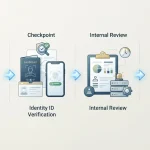
For a withdrawal, the casino has to initiate the transfer and send it to the PayID details associated with your bank. That banking step is separate from the casino’s decision to approve the request. A casino may need to review a withdrawal internally before it sends any payment; PayID does not perform that review or determine whether a casino will pay. After approval, the transfer still has to be directed to the correct identifier. If your bank-registered PayID details and the details held for the withdrawal do not match, the payment may fail to reach the intended account.
Deposit Process
Step 1: Enter Details
You provide the payment amount and the recipient’s PayID details within the payment flow.
Step 2: Bank Confirmation
Your bank presents the transfer for your review and confirmation.
Step 3: Approval
You approve the instruction, and the banks process the transfer through the network.
Step 4: Account Crediting
The recipient receives the funds, and the casino associates the payment with your player account.
This distinction helps explain why a deposit and a withdrawal can behave differently even when both use PayID. A deposit begins with an instruction from you and is authorised through your bank. A withdrawal begins with a request to the casino, which controls when it submits the payment. The banking transfer is only one part of the withdrawal path; the casino’s review and the accuracy of the recipient details affect what happens before funds reach your bank.
Your bank sets the daily PayID transfer limit for your account. A payment that exceeds the available limit may not be accepted as submitted, so check your bank’s stated limit before creating a transfer. The applicable limit is a bank setting, not a property of the PayID identifier itself. It can therefore differ between accounts, and the amount accepted for one person should not be assumed to apply to another.
The final confirmation is the point at which care matters most. Review the amount and recipient before you approve a payment, and avoid assuming that a confirmed transfer can be cancelled if you change your mind. If a transfer appears to have gone to the wrong destination or has not been credited, retain its confirmation details and contact the relevant bank or service rather than sending a duplicate immediately.
This describes payment mechanics, not a recommendation to use an online casino. Under the Interactive Gambling Act 2001, operators cannot lawfully provide real-money online casino games to people physically located in Australia. PayID’s role as a payment method does not alter that legal position.
Bitcoin Pokies in Australia: Payments and Credits
PayID in Australia: Benefits and Bank Restrictions
PayID’s practical advantage is the short time a transfer can take once it is accepted. A deposit made through PayID at an online casino is typically completed within seconds. That speed comes from the payment method and bank transfer process; it does not mean that every payment will be accepted, or that a casino account will be credited instantly in every case. A bank can still decline a transaction, and the receiving service must still process it.
The distinction matters because “fast” describes a possible transfer time, not guaranteed access. If your bank allows a payment and the receiving service handles it without delay, the funds can move quickly. If the bank blocks the recipient, the transfer does not proceed simply because PayID normally operates quickly. The method’s convenience therefore depends on two separate conditions: PayID must be available for the transaction, and the bank must permit that particular payment.
No PayID transfer fee does not mean no possible cost
PayID itself does not charge a transfer fee. Reputable venues also do not add a separate fee for PayID deposits or withdrawals. This can make the payment route simpler to assess: the payment method is not adding its own charge to the amount transferred.
That does not establish that every service has no costs of any kind. A venue may set its own payment terms, and your bank account’s terms remain separate from PayID’s fee structure. Read the relevant terms rather than treating “no PayID fee” as a promise that every stage of a transaction is cost-free. The useful distinction is between a fee charged by PayID for transferring funds and any separate charge imposed by another party.
While PayID does not charge a transfer fee, your own bank account terms remain separate and may involve their own costs.
The absence of a PayID transfer fee also says nothing about the quality or legality of the service receiving money. A payment method is infrastructure. Its role is to carry a payment; it does not certify the recipient, establish that a service is fair, or promise that funds will be returned when requested. Those are separate matters and should not be inferred from the presence of a familiar Australian payment option.
A bank may still refuse the payment
Some Australian banks may restrict PayID transfers to merchants they identify as gambling businesses. A specialist review reports that major banks, including members of the Big Four, have occasionally blocked payments to known gambling merchants under their acceptable use policies. This is a report of possible restrictions, not a guarantee that every major bank blocks such payments or that a particular bank will handle every transaction the same way.
The practical result is that a payment can fail even when you have entered the details correctly and PayID is technically available. A bank’s decision may depend on its policies and how it classifies the recipient. Restrictions can also change, so an account holder should not assume that a previous successful transfer means a later one will be accepted.
If a payment is declined, do not treat repeated attempts as a way to make it go through. The bank’s restriction is a decision about the transaction, not a technical error that PayID necessarily resolves. Contact your bank through its official channels if you need to understand a declined payment. Do not try to disguise the recipient or route the payment through another method to get around a bank’s controls.
Pay by Phone Casinos Australia: Payment Methods
There is an important Australian legal context here. Under the Interactive Gambling Act 2001, operators are prohibited from providing real-money online casino games, including pokies, to people physically located in Australia. The fact that a payment service can transfer funds, or that a merchant displays PayID, does not change that restriction. PayID access should not be read as approval of a gambling service or as evidence that the service is authorised to offer real-money casino games to Australians.
What the trade-off means
PayID can combine a rapid transfer with no fee charged by the payment system itself. Those are concrete advantages when a payment is permitted. The limitation is that neither feature overrides a bank’s controls. A transaction may be quick and fee-free in principle yet unavailable to you because your bank declines the recipient.
Keep these points separate when assessing a payment claim: the speed describes how quickly an accepted transfer may complete; the fee statement describes charges from PayID and, at reputable venues, any added PayID charge; bank restrictions determine whether the transfer is permitted in the first place. None of them verifies the recipient’s status or changes the law applying to real-money online casino services in Australia.
Checking Whether a Casino Accepts PayID
Before creating an account, check the payment information available on the casino’s own website. The cashier page is the key place to confirm whether PayID is listed as a deposit option. A logo or mention elsewhere on the site may be outdated, apply only to certain account types, or refer to a different payment route. If the cashier information is unclear, ask the operator to confirm the method and any conditions in writing before sharing personal or banking details.
Do
- Check the cashier page for PayID listing
- Confirm if it supports deposits, withdrawals, or both
- Verify the operator’s identity and regulatory status
Don’t
- Rely on outdated logos or general statements
- Send money just to test a payment route
- Assume a payment logo proves a site is licensed
Availability can change. A payment option may appear on an old help page even after it has been removed from the cashier, or it may be visible only after registration. The latter creates a practical problem: you may have to disclose information before learning whether the method is available to you. Prefer information you can inspect without opening an account, and do not treat a general statement such as “fast local payments” as confirmation that PayID is supported.
Check the wording carefully. A site might list a bank transfer option without identifying it as PayID, or display PayID branding without explaining whether it applies to deposits, withdrawals, or both. Those are separate questions. A clear cashier entry should identify the payment method and indicate the transaction type it supports. If the site’s pages conflict, the discrepancy is a reason to pause rather than guess which description is current.
You can also check whether the cashier presents the method for the country and account details you intend to use. A payment option shown to visitors in one location may not be offered to everyone. The listing alone does not establish that your bank will allow a transfer, that the casino will accept your account details, or that an attempted payment will be processed. Do not send money merely to test an unclear or inconsistent payment route.
What a PayID listing does—and does not—show
Seeing PayID in a cashier confirms only that the operator claims to offer that payment method. It is not evidence that the operator is licensed, that games are fair, or that withdrawals will be honoured. These are different matters and need separate verification. Payment branding is easy to display; it does not independently establish the operator’s legal status, oversight, game controls, or treatment of customer funds.
This distinction matters in Australia. Under the Interactive Gambling Act 2001, providing real-money online casino games, including pokies, to people physically located in Australia is illegal for operators. A PayID option does not change that rule or make an offshore casino lawful to serve Australian customers. Do not interpret access to a payment method as approval by an Australian authority.
If you are assessing an operator’s claims about regulation, look for information that can be checked publicly with the named regulator. A badge, licence number, or legal statement on the casino’s own page is not verification by itself. Confirm that the regulator’s public records support the claim and that the entity named there matches the entity operating the site. If you cannot verify the claim independently, do not treat it as established.
Attention: A PayID listing in a cashier does not independently establish that an operator’s games are fair or that withdrawals will be honoured.
The same separation applies to fairness and payouts. A cashier listing cannot tell you whether game outcomes are independently tested, how complaints are handled, or whether the operator will approve a withdrawal. Those questions require evidence specific to the operator and its practices. Do not let a familiar payment method substitute for that evidence.
A cautious pre-registration check
Use a consistent check before deciding whether to proceed:
- Open the casino’s cashier or payments page without registering, if possible, and look for PayID by name.
- Confirm whether the page describes deposits, withdrawals, or both; do not infer one from the other.
- Check whether the information is consistent across the cashier, payment terms, and help pages.
- Look for publicly verifiable information about the operator’s regulatory status, and compare the named entity with the operator’s own disclosures.
- If key details are unavailable or contradictory, contact support and keep the response. A vague assurance is not a substitute for a clear answer.
This process can establish what the site says it accepts, but it cannot remove the legal restrictions that apply in Australia or guarantee access through your bank. Nor does a recently added PayID logo prove that the operator has been independently assessed. Treat claims about a “new” payment option as claims to verify, not as a quality signal.
Avoid providing identity documents or banking information until you understand who operates the site and why the information is being requested. A legitimate payment-method label does not make every request safe. If the operator’s identity, terms, or regulatory claims cannot be checked, the uncertainty remains even when PayID appears in the cashier.
The useful conclusion from a cashier check is narrow: you have confirmed whether the site currently lists PayID for the transaction type described. It does not certify the operator or establish that using the service is lawful in Australia. Keep payment availability, regulatory claims, game fairness, and payout reliability as separate checks, and do not treat one as proof of another.
What to Check Before Comparing PayID Options
A payment method is only one part of a comparison. PayID can describe how money is transferred; it does not establish whether a gambling service is lawful for people in Australia, how it treats customers or whether it will release funds. A careful assessment therefore starts with the service’s legal status and operating arrangements, not with the appearance of its payment page.
Under the Interactive Gambling Act 2001, providing real-money online casino games to people physically located in Australia is illegal. That includes pokies and other casino-style games. An offshore licence, even one that can be checked against a foreign regulator’s public records, is not an Australian authorisation and does not make the service lawful to provide to customers here. Public verification can confirm whether a named overseas authority lists an operator; it cannot turn that licence into permission to serve Australia.
This distinction matters when a site describes itself as licensed or regulated. Check what authority issued the licence, whether the authority’s own records identify the same operating company, and what activity the licence covers. Treat an operator’s logo or a claim on its own page as a lead to verify, not as independent proof. For Australian readers, however, even a genuine foreign licence does not remove the legal restriction on supplying online casino games in Australia. This information is not a recommendation to use an offshore service.
If you are assessing a service’s conduct, look for terms that identify the operating company and explain how disputes are handled. A clear company identity makes claims easier to check; vague or inconsistent details make accountability harder to establish. Read the rules that apply to withdrawals, account verification and account closure before relying on any statement about payment convenience. Marketing language such as “fast payouts” is not a substitute for a defined process.
Comparison Factors
- Separate the operator’s internal review process from the actual bank transfer time
- Ensure account names on the casino profile match the names on the bank account
- Verify the specific authority that issued the operator’s licence
- Review the full terms and conditions rather than relying on marketing phrases
PayID does not settle a withdrawal request by itself. The casino first has to review and approve the payout. Specialist review material describes this as an internal operator process whose duration can vary, with identity verification status affecting the result. That means a comparison of the payment rail alone cannot tell you when funds will be released. Check whether the stated process explains what documents may be requested, when verification occurs and how the operator communicates a decision. These details help you assess the process, but they are not a guarantee of payment.
A useful comparison separates the operator’s review from the transfer after approval. If terms use one broad phrase for both stages, you cannot tell whether a delay is caused by account checks, an internal queue or the transfer itself. Seek wording that distinguishes review, approval and payment, and that explains what happens if information is missing. Withdrawal processing speeds vary between casinos, according to specialist review material; claims about speed should therefore be treated as operator-specific descriptions, not as a property of PayID.
Also examine whether the rules are consistent across the cashier, general terms and promotional conditions. If one page promises a process while another gives the operator broad discretion to delay or refuse a withdrawal, the practical meaning is governed by the terms as a whole. Pay attention to identity requirements and to whether the account name and payment details must correspond. Inconsistent personal details can create a verification problem even when the payment method itself is functioning.
Do not infer fairness, transparent game return information or willingness to pay winnings from the presence of PayID. Those are separate claims and require separate evidence. A payment option shows only that the operator presents that method; it does not independently verify the operator, its games or its handling of customer funds. Likewise, a polished site or a list of payment methods is not evidence that disputes will be resolved in your favour.
A comparison that asks which PayID pokies are “best” can obscure the more important question: whether a real-money casino service may lawfully be supplied to you in Australia. Since online casino provision to people here is prohibited, no payment feature can make an operator an appropriate recommendation. The practical value of reviewing company identity, licence records, terms and withdrawal procedures is to understand what a service claims and where its risks lie—not to treat a convenient payment route as proof of safety or legality.
PayID Real-Money Deposits, Withdrawals and Bonus Terms
PayID payment limits and payout conditions are set at more than one point in a transaction. Your bank controls the transfer limit on its side, while the casino sets its own deposit and withdrawal rules. Separately, a casino may review a withdrawal before releasing it. These distinctions matter when interpreting a stated minimum, a fee or an estimated arrival time.
In Australia, the Interactive Gambling Act 2001 prohibits operators from providing real-money online casino games, including pokies, to people physically located in the country. The information below describes payment terms reported in connection with such services; it is not an invitation or recommendation to use them.
Typical Deposit Minimum AU$10 – AU$20
Typical Withdrawal Minimum AU$20 – AU$50
Casino Pending Period 24 – 72 hours
PayID Transfer Time 12 – 24 hours after approval
Minimums and deductions
Reported minimum PayID deposits at online casinos commonly fall between AU$10 and AU$20. A deposit minimum is a venue rule, not a PayID-wide limit: a payment system can carry a transfer without setting the amount that a casino will accept. Before any transaction, the relevant cashier terms would need to be read carefully, including whether the stated minimum applies to each deposit or to another condition.
Withdrawal minimums are often reported in the AU$20–AU$50 range. That figure is separate from any fee or deduction. A withdrawal request below a casino’s internal threshold may be handled differently from a larger request. A specialist review reports that some operators deduct AU$5–AU$10 when a withdrawal falls below thresholds such as AU$100 or AU$200. Those figures describe reported examples, not a universal PayID rule or a charge that applies everywhere.
A separate specialist review reports that some casinos charge AU$2–AU$5 per withdrawal. Do not assume this is the same as a low-withdrawal deduction: one may be a transaction charge, while the other may depend on the amount requested. The terms should state whether a fee is charged, when it applies and whether it is taken from the requested sum or handled separately. PayID itself does not charge transfer fees, but a casino’s own terms may still describe a charge.
The practical result is that the amount you request may not equal the amount received. Check the minimum, any threshold-based deduction and any separate withdrawal charge as distinct conditions. If the wording is unclear, the figures alone are not enough to establish what a particular operator would deduct.
Approval is not the same as transfer time
A withdrawal has at least two stages: the casino’s internal handling and the payment transfer after approval. A displayed status such as “pending” may therefore mean the casino has not yet released the funds; it does not necessarily mean that PayID is still processing a bank transfer.
Safe Online Pokies Australia: Offshore Risks
A specialist review reports casino-initiated pending periods of 24–72 hours before funds leave the casino’s system. Another specialist review describes PayID transfers after approval as taking 12–24 hours, with the combined request-to-receipt period reported as 2–4 days when internal pending time is included. These are reported time ranges, not guaranteed service deadlines. The casino’s review process and the player’s KYC status can affect when a request is approved; the bank-transfer stage begins only after release.
This distinction helps explain why a payment method described as quick does not make the full withdrawal process instantaneous. If a request has not been approved, waiting for the bank will not resolve the delay. If it has been approved but the funds have not arrived, the relevant question is whether the transfer has been sent and whether the receiving account details are correct. Keep the account-name requirements in mind: mismatched bank and casino profile details can cause withdrawal problems.
Bonus conditions and maximum bets
A bonus is not simply extra withdrawable money. Its terms may require wagering before bonus-related funds or winnings can be withdrawn. A specialist review reports wagering requirements of 30x–45x the bonus amount. The multiplier and the amount to which it applies should be clear in the terms; a requirement tied to the bonus differs from one calculated on the bonus plus a deposit.
The maximum bet allowed while wagering is also important. If you exceed the bonus’s maximum bet limit, the casino may void the bonus and associated winnings. That consequence can apply even when the balance appears to have increased. Check the maximum-bet condition alongside the wagering requirement, eligible games and any expiry rule rather than reading the headline bonus amount alone.
Bonus conditions do not change PayID’s transfer mechanics, but they can affect whether funds are eligible for withdrawal. A withdrawal request may therefore be delayed or disputed because of a bonus-term review rather than a payment-network problem. Where terms are unclear, do not assume that a displayed balance is available to withdraw.
How do you deposit money into online casino sites using PayID?
Enter the amount and the recipient’s PayID details, then check the recipient shown by your bank before confirming the transfer. Your PayID must match the one registered with your bank, and a confirmed payment cannot be reversed.
Does PayID charge fees for casino deposits or withdrawals?
PayID itself does not charge transfer fees, and reputable venues do not add fees for PayID transactions. However, some casinos charge A$2–A$5 per withdrawal or deduct A$5–A$10 from withdrawals below their internal thresholds.
How long do PayID cashouts usually take?
After casino approval, a PayID withdrawal usually reaches your account the same day, often within 12–24 hours. A casino’s pending period and review can make the total time from request to receipt around 2–4 days.
What are the limits?
Your bank sets your daily PayID transfer limit. Casino minimum deposits are typically A$10–A$20, though some start at A$5; minimum withdrawals are commonly A$20–A$50.
What does it cost to start?
Most operators set the minimum PayID deposit at A$10–A$20, while some accept A$5. Check the operator’s minimum before making a transfer.
Do online casino sites in Australia use PayID?
Some online casino sites accept PayID deposits, but a payment option does not show that a site is licensed or that its service is legal in Australia. Operators must not provide real-money online casino games, including pokies, to people physically located in Australia.
Are there any casino sites in Australia that offer withdrawals via PayID?
PayID supports withdrawals, but whether a casino offers them depends on that venue’s payment options. A casino’s use of PayID does not establish that its real-money pokies service is legal for people in Australia.
Payments

Anonymous Crypto Casinos in Australia: What to Know
Crypto payments may use wallet addresses instead of bank details, but casinos can still request...

Aristocrat Online Pokies in Australia: What to Know
The phrase can refer to a named machine, a provider association or a claimed online...

Aussie Crypto Casinos: How Payments and Checks Work
A practical guide to payment flows, operator checks, account verification and crypto-related risks. How Offshore...

New Australian Online Pokies: Free Play and Legal Limits
The guide explains how free play differs from wagering and why labels, bonus claims and...

Online Casino Payment Methods for Aussies
See how deposits, verification and withdrawals connect, and why payment availability can differ at each...

Best-paying online pokies in Australia: key facts
The guide separates free play from real-money gambling and explains Bitcoin deposits, withdrawals, verification and...

Bitcoin Pokies in Australia: Payments and Credits
See how game credits relate to Bitcoin, how payments move, and what to consider when...

Casino Sites That Accept Amex in Australia
Amex may appear as a deposit option at some Australian casinos, but acceptance does not...

Casino Sites That Accept BPAY in Australia: What to Check
Consumer payment habits do not establish merchant acceptance; deposit options, withdrawal claims and game access...

Credit Card Casino Sites in Australia: Rules & Payments
The guide separates operator restrictions from player conduct and explains card processing, identity checks, fees...

EcoPayz Casino Sites in Australia: What to Check
Payment support depends on the operator, location and transaction, while withdrawal routes may need separate...

Osko at Australian casino sites: what is verified
Contactless use and bank-linked services are common, but they do not establish which options an...

Paysafecard casino sites in Australia: payment guide
A Paysafecard label does not confirm deposit limits, withdrawal options, or access to every game....

Skrill Casino Sites in Australia: What to Verify
The guide separates general payment familiarity from merchant-level acceptance and explains which Skrill casino details...

Trustly at Australian Casino Sites: What to Check
Trustly availability depends on the specific casino and transaction; familiar Australian payment habits do not...

Under an Hour Casino Withdrawals in Australia
A withdrawal’s total time depends on checks and approval as well as how quickly the...

Casino Withdrawals Without ID Verification in Australia
Payment method, account checks and bonus wagering can each affect when a withdrawal is approved...

Casinos That Accept Apple Pay in Australia: What to Check
A compatible device and linked card do not determine which payment methods an online operator...

Casinos That Accept Bitcoin in Australia: Payments
Bitcoin deposits move from a wallet to a casino-designated address, while crediting and withdrawals depend...

Bitcoin Cash Casinos in Australia: Deposits & Checks
A practical guide to deposit requests, transaction matching, casino checks, withdrawals, bonuses and games for...

Casinos That Accept CashToCode in Australia
Everyday payment acceptance in Australia does not confirm that an online casino offers CashToCode or...

Casinos That Accept Ethereum in Australia
The page explains what broad crypto-payment descriptions establish—and why they do not confirm Australian access,...

Casinos That Accept Google Pay in Australia
Google Pay’s role depends on the merchant, payment service and funding option, while deposits, withdrawals...

Casinos That Accept Litecoin in Australia
A practical guide to Litecoin deposit instructions, blockchain confirmation, account credits and the checks that...

Casinos That Accept Mastercard in Australia
Everyday card acceptance does not confirm online support; casino payment options depend on the arrangements...

Casinos That Accept MiFinity in Australia: What to Verify
A payment mention alone does not confirm support for Australian-facing casino play. MiFinity and Australian...

Casinos That Accept Neosurf in Australia: How to Check
Payment support is operator-specific, and a listed deposit method does not establish how casino withdrawals...

Casinos That Accept Neteller in Australia in 2026
Neteller availability, withdrawal timing and bonuses require separate checks, while Australian rules shape the risks...

Casinos That Accept PayID in Australia: What to Check
PayID’s familiarity does not confirm casino support, Australian availability, deposit options or withdrawals. How PayID...

Casinos That Accept PayPal in Australia: What to Check
Search terms express a payment preference, but they do not verify a casino’s PayPal access,...

Casinos That Accept POLi in Australia: How to Check
A payment mention is not proof of availability: the operator’s cashier must show POLi for...

Casinos That Accept Tether USDT in Australia
A payment option shown in the cashier does not confirm that a transaction has been...

Casinos That Accept Visa in Australia: What to Check
Visa availability depends on each casino’s payment options and transaction processing, not simply on a...

Dragon Link Online Pokies in Australia: What to Know
This guide distinguishes slot terminology, play modes, Australian legal boundaries and Bitcoin payment steps without...

Easy Withdrawal Casinos in Australia: How Payouts Work
A practical guide to payout stages, payment routes, account checks and the rules that can...

Fast Casino Withdrawals in Australia: How They Work
A withdrawal can remain pending during operator checks, even when the chosen payment method can...

Instant Bank Transfer Casinos in Australia: Guide
A practical guide to how bank transfers are handled for deposits and withdrawals, including timing,...

Instant PayID Withdrawals in Australia: How They Work
A clear look at the casino’s release step, PayID transfers through the NPP, and the...

Instant PayID Withdrawals for Real Money in Australia
PayID uses the NPP and Osko for real-time bank transfers, but casino checks happen before...

No KYC Casinos in Australia: Checks and Withdrawals
Understand when identity checks may occur, how crypto and PayID payments are described, and why...

Online Pokies Instant Withdrawals in Australia
Withdrawal speed depends on account checks, operator approval and the payment method—not just the transfer...

Online pokies PayID in Australia: deposits and terms
The guide explains venue-set minimums, irreversible confirmed transfers and the Australian legal restriction on real-money...

Pay by Phone Casinos Australia: Payment Methods
PayID uses a mobile number or email to route a bank payment through the NPP;...

Quick Withdrawal Casinos in Australia: How Payouts Work
A withdrawal moves through operator review and payment processing, with method choice, account checks and...

Real Cash Online Pokies in Australia: Bitcoin Guide
See how game credits, Bitcoin payments, bonus conditions and payout checks fit together when playing...

Safe Online Pokies Australia: Offshore Risks
The guide distinguishes legal status, payment risks, withdrawal checks and bonus conditions without treating offshore...

Same-Day Payout Casinos in Australia: What to Know
A practical guide to the steps between submitting a withdrawal and funds arriving, including approval,...

Solana Casino Comparison for Australia
Understand how funding, withdrawal conditions, wagering rules and SOL price changes affect the value and...