Credit Card Casino Sites in Australia: Rules & Payments
 Available in AU

The guide separates operator restrictions from player conduct and explains card processing, identity checks, fees and withdrawal issues.
Table of Contents
- What Australian Rules Mean for Credit-Card Casino Payments
- How a Credit-Card Deposit Is Processed
- Credit-Card Acceptance Is Not the Same as Payment Security
- How Australians Use Cards Alongside Other Payment Methods
- What a “Top” Credit-Card Casino Claim Can—and Cannot—Show
- Real-Money Payments and Identity Checks
- Why Casino Withdrawals May Not Return to Your Card
- When an Online Casino Accepts American Express
- If You Do Not Use a Credit Card
- Fees, Limits and Currency Conversion When You Pay by Card
- Payments
What Australian Rules Mean for Credit-Card Casino Payments
The first question about a credit-card casino payment in Australia is not which card a website accepts. It is whether an operator may offer the underlying online casino service to someone located in Australia. The Interactive Gambling Act 2001 prohibits operators from providing real-money online casino games to people in the country. That prohibition covers casino-style games such as poker, blackjack, roulette and pokies.
The law places the relevant restriction on the operator providing the service. It does not explicitly make an Australian player’s use of an offshore casino a criminal offence. Those are distinct points: the operator’s conduct is prohibited, while the Act does not expressly criminalise the player for using an offshore site. That distinction should not be read as a statement that offshore gambling is regulated locally or that a person using such a service receives the protections available in Australia.
The Australian Communications and Media Authority, or ACMA, administers enforcement of the Act. The framework is therefore not one in which an offshore casino can become lawful for Australian customers simply by describing itself as an international operator or by accepting an Australian card. A payment option concerns how a transaction is handled; it does not change whether the service itself may lawfully be offered to a person in Australia.
This matters when you see a claim about a casino site that accepts credit cards in Australia. “Accepts” can describe a technical capability: a cashier may display a card brand, or a payment may be processed. It does not establish that the operator is permitted to provide real-money casino games to Australian residents. Nor does the presence of a card option amount to Australian approval, licensing or consumer oversight. Payment availability and legal status are separate questions.
The operator’s restriction and the player’s position
The Act’s prohibition concerns the provision of online casino games to people physically in Australia. A website’s location, branding or description does not alter the location of the customer receiving the service. The legal boundary is not defined by whether the casino’s page loads, whether its terms mention Australia, or whether a card transaction can be submitted. Those details do not override the statutory restriction on operators.
Trustly at Australian Casino Sites: What to Check
At the same time, the Act does not explicitly criminalise an individual for using an offshore site. It is important to preserve that distinction without turning it into reassurance. The absence of an express player offence does not make the offshore service lawful for the operator, and it does not bring the service under Australian consumer protections. A reader should not confuse “the player is not expressly criminalised under this Act” with “the transaction is protected under Australian law.”
Australian consumer law does not protect players using offshore casinos. If a dispute arises with an offshore operator, you cannot assume that Australian consumer protections apply simply because you live in Australia, use an Australian-issued card or see the site presented in Australian dollars. The operator’s willingness to accept customers from Australia is not evidence that the operator is answerable under Australian consumer law.
This is why a search for an online casino with credit-card payments cannot be treated as a straightforward comparison of payment features. Before considering the mechanics of any transaction, the legal context is that operators are prohibited from offering real-money online casino games to people in Australia. A card’s acceptance by a website cannot remove that prohibition or provide the player with local consumer-law protection.
What a payment claim does not establish
A statement that an online casino takes credit cards describes, at most, a payment facility. It does not establish that the service is authorised for Australian residents, that the operator is subject to Australian oversight, or that a player has recourse under Australian consumer law. The reverse is also true: the Act’s restriction on operators is not a technical description of whether a card payment will go through. Legal permission and payment processing are different matters.
For the same reason, a list or label presenting casinos as suitable for Australian players cannot itself establish legal status. A payment method, a site’s wording and the player’s ability to access a page are not substitutes for the requirements of the Interactive Gambling Act. The relevant legal context remains the same regardless of whether the advertised option is described as a credit card, Amex or another card.
Legal Warning
Australian law prohibits operators from providing real-money online casino games to people in Australia, and Australian consumer law does not protect players using offshore casinos.
Keep the distinction clear: Australian law prohibits operators from providing real-money online casino games to people in Australia; the Act does not explicitly criminalise players who use offshore sites; and Australian consumer law does not protect those players in their dealings with offshore casinos. ACMA enforces the statutory framework. These points explain the legal setting for card-payment claims, but they do not endorse or guide access to offshore gambling services.
How a Credit-Card Deposit Is Processed
A credit-card deposit is a payment request sent from a cashier to the card payment system. For an Amex transaction, the basic sequence is selecting Amex as the payment method, providing the card details, entering a deposit amount in Australian dollars, and submitting the request. The cashier then displays the transaction’s outcome. This describes the mechanics of a payment, not a way to access an online casino.
That distinction matters in Australia. Under the Interactive Gambling Act 2001, operators must not provide real-money online casino games to people in Australia. A description of how a card payment works does not make such a service lawful or endorse using one. Australian consumer law does not protect players who use offshore casinos.
What happens at the cashier
The cashier is the part of an online service that presents its payment options. If Amex is offered there, the payment flow begins when that method is selected. The next fields request the card details and the amount to be paid. For the transaction described here, the amount is entered in AUD before the payment is submitted.
EcoPayz Casino Sites in Australia: What to Check
These are separate pieces of information: the selected payment method tells the cashier which card route to use; the card details identify the payment instrument; and the amount specifies the requested charge. Submitting the form sends the payment request for processing. Until submission, the transaction has not been sent as a payment request.
A cashier’s display is therefore relevant to the transaction’s first step, but it should not be confused with a general statement about card acceptance. The process described applies only when Amex is presented as an available option. It does not establish that every site offers Amex or that a payment request will necessarily complete.
What “instant” processing describes
Amex deposits at casinos are described as being processed instantly. In practical terms, this refers to the deposit transaction being handled without a waiting period of the kind associated with a slower payment route. It describes processing speed, not the availability of the card option: a payment cannot be submitted through Amex at a cashier that does not offer it.
It also does not change the order of the steps. The cashier first needs the method selection, card details, and AUD amount; the payment is then submitted. “Instant” does not mean that no submission is needed, nor does it explain whether a particular operator offers the method. It is a timing description for the transaction, not a universal promise about every cashier or every attempted payment.
Amex Deposit Process
Step 1: Method Selection
Select American Express as the payment method in the cashier.
Step 2: Enter Details
Provide your card details and enter the deposit amount in Australian dollars (AUD).
Step 3: Submit Request
Submit the form to send the payment request for processing.
For the same reason, processing speed should not be treated as evidence that an online casino is suitable for an Australian resident. A rapid payment mechanism and the legality of the service are different questions. The fact that card payments can be processed quickly does not alter the restrictions on operators providing real-money online casino games in Australia.
How to read a payment status
A cashier’s response indicates what happened to the submitted request as shown by that service. If a deposit is recorded, the payment has been processed in the sense described by the cashier. If no deposit is recorded, the transaction has not produced that result. The label or message is specific to the payment flow; the speed associated with Amex does not by itself explain the reason for any particular outcome.
This is why “instant” should be read narrowly. It concerns the stated processing time for an Amex deposit, not whether Amex appears among the available methods, whether a service may lawfully offer casino games to Australians, or what consumer protections apply. Those questions cannot be answered by the payment sequence alone.
The sequence is straightforward to describe: choose Amex in the cashier, enter the card details and an AUD amount, then submit the payment. The important distinction is between that mechanical sequence and the conditions under which a service makes the method available. A description of the sequence is not a recommendation to make a deposit or to use an offshore casino.
Credit-Card Acceptance Is Not the Same as Payment Security
A card option answers a narrow question: can a particular payment route be used for a transaction? It does not, by itself, establish who operates the website, how card details are handled, whether a payment will be approved, or what recourse you would have if something goes wrong. Treating a credit-card option as a general safety signal confuses payment availability with several separate questions.
Casino Sites That Accept BPAY in Australia: What to Check
The distinction matters especially with Amex. A specialist review reports that some online casinos do not accept American Express. That observation is not a permanent property of the market: payment options can differ between operators and change over time. Even where a cashier displays Amex, that only indicates that the operator presents it as an available option. It does not show that every Amex transaction will be authorised or that the website has been independently assessed for security.
What acceptance can tell you
At most, a displayed card option suggests that the operator has arranged for that card brand to be used through its payment setup. The card issuer still has a role in deciding whether a particular transaction proceeds. A payment can therefore fail even when a website appears to accept the card.
A specialist review describes one reason: Amex may block payments to a particular website. Separately, Australian banks may block gambling-related transactions on Amex cards at the issuer level. In either case, the result can look similar from the user’s perspective—a declined payment—but the decision may come from a different part of the payment chain. The operator’s acceptance of a card does not override a restriction applied by Amex or the issuing bank.
That difference also limits what you can infer from a successful transaction. Approval shows that the payment passed the checks applied to that transaction at that time. It does not establish that later transactions will be approved, that the operator will handle personal information appropriately, or that the service is subject to Australian consumer protections.
Attention: A displayed card logo is not a security audit and does not guarantee that the operator is authorised to provide services to people in Australia.
What acceptance cannot establish
A credit-card logo is not a security audit. It does not verify the identity or conduct of the website operator, demonstrate how account information is stored, or guarantee that a transaction will be handled in a particular way. Nor does it prove that a site is authorised to provide its service to people in Australia.
These are different layers of risk. Card authorisation concerns whether the payment can proceed. Website security concerns the handling of information and access to an account. Legal status concerns whether the service may be offered to Australian residents. A positive answer at one layer does not supply an answer at the others.
This distinction is important in Australia because the Interactive Gambling Act 2001 prohibits operators from offering real-money online casino games to people physically located in the country. The Australian Communications and Media Authority enforces the Act. A site’s ability to display a credit-card option does not alter that legal position or provide evidence of local oversight.
Australian consumer law does not protect players who use offshore casinos. That means card acceptance should not be mistaken for a route to the protections available when dealing with a business covered by Australian consumer law. A payment method may be familiar, but that familiarity does not transfer Australian consumer protections to an offshore gambling service.
Osko at Australian casino sites: what is verified
Reading a payment option accurately
If you encounter an Amex option in a cashier, interpret it only as a statement about the payment method the operator says it can process. It is not proof that the issuer will permit a transaction, that the operator is trustworthy, or that you can seek help through Australian consumer law. If a transaction is blocked, the cause may lie with the operator’s payment arrangements, Amex, or the issuing bank; the presence of the card option does not identify which one.
Nor does the word “secure” become meaningful merely because a site accepts a credit card. To assess that claim, you would need evidence about the specific security measures and the entity responsible for them. Card-brand acceptance alone supplies neither. The same is true of a successful authorisation: it confirms only that a particular payment passed through the applicable approval process, not that the broader service is safe or legally available in Australia.
Keep the questions separate: whether a card is listed, whether the issuer permits the transaction, how the website handles information, and what legal protections apply. Combining them into one judgment can make a payment option appear to say more than it does. In Australia, the legal restriction on operators and the absence of Australian consumer-law protection for offshore casino use remain relevant regardless of which card brand a website displays.
How Australians Use Cards Alongside Other Payment Methods
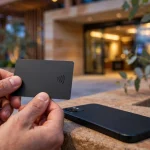
Payment in Australia is not tied to a single card or device. In everyday commerce, contactless credit and debit cards are accepted in nearly all places where card payments are taken. Mobile wallets, including Apple Pay and Google Pay, have similarly broad acceptance. That familiarity means a person can move between tapping a physical card and using a phone without treating them as entirely different kinds of payment.
Physical Cards
Contactless credit and debit cards are tapped at a terminal for payment.
Mobile Wallets
Apple Pay and Google Pay present a digital version of a card through a compatible device.
Bank-Linked Services
Services like PayPal act as another route for making a payment connected to bank accounts.
The underlying distinction is between the payment instrument and how you present it. A physical card is tapped at a terminal; a mobile wallet presents a digital version of a card through a compatible device. Both can serve the same role at checkout, though acceptance still depends on the merchant and the payment setup. “Accepted almost everywhere” describes broad reach, not a promise that every merchant, service or transaction will work.
People also move between card payments and services connected to bank accounts. PayPal is one example of a bank-linked service that Australians are comfortable using alongside cards and mobile wallets. This points to a flexible habit: the choice can depend on what the merchant supports and which method the customer prefers at that moment. It does not mean that every payment service is available in every setting, or that a method accepted for ordinary purchases will be accepted for every type of transaction.
A credit card and a debit card may look similar at the point of contactless payment, but they draw on different sources of funds. A mobile wallet, by contrast, is a way to present a payment credential from a device rather than a separate source of money in itself. A bank-linked service can sit between the customer and the merchant as another route for making a payment. Keeping these roles separate helps explain why one person can use several methods without treating them as interchangeable in every circumstance.
That matters when you compare ordinary payment habits with searches about paying for online gambling. The fact that Australians routinely tap cards or phones in shops says nothing by itself about whether a particular online service accepts a card, wallet or bank-linked service. In particular, wide acceptance of contactless payments in everyday settings should not be read as evidence that a casino payment is available or permitted. Payment infrastructure and the rules governing a service are separate questions.
If you prefer not to use a credit card, the wider pattern is still useful: Australians are accustomed to choosing among more than one payment channel. A wallet may present a card digitally; a bank-linked service may provide another route; a debit card can be used instead of credit where accepted. These options are not guarantees of access to a specific website or category of service. Each transaction depends on the method offered by the merchant and any restrictions attached to that transaction.
The practical takeaway is to identify what kind of payment route you are considering before assuming that familiarity means universal compatibility. A tap-to-pay habit describes how people commonly pay in person. It does not establish the rules or available methods for an online transaction, and it does not turn a general payment option into an endorsement of a gambling service.
What a “Top” Credit-Card Casino Claim Can—and Cannot—Show
If you’re looking for a casino site that accepts credit cards in Australia, check the current payment options and terms before depositing. The details below offer a brief reference point, but they do not confirm credit card acceptance.
1. 7Bit Casino
License: Curacao, operated by Dama N.V. 7Bit Casino is listed with a Curaçao licence and is operated by Dama N.V. Check its current cashier details to see whether credit card deposits are available to you.
2. Bizzo Casino
License: Curacao Gaming Control Board (TechSolutions Group N.V.) Bizzo Casino is listed with a Curaçao Gaming Control Board licence, with TechSolutions Group N.V. named as the operator. Its listed details do not specify credit card availability, so check the payment options directly.
3. House of Pokies
License: international iGaming licence – jurisdiction not named in the source · Payout speed: PayID 1-24 hours · Min. deposit: A$30 (PayID from A$10) House of Pokies lists PayID payouts of 1–24 hours and a minimum deposit of A$30, or A$10 when using PayID. Its licence is described as an international iGaming licence, but the jurisdiction is not named.
4. LuckyVibe
License: Curacao Gaming Control Board OGL/2023/176/0095 (Hollycorn N.V.) LuckyVibe is listed with Curaçao Gaming Control Board licence OGL/2023/176/0095, held by Hollycorn N.V. The available details do not say whether you can deposit by credit card.
5. Roby Casino
License: Curacao eGaming (Roby Games Ltd) Roby Casino is listed with a Curaçao eGaming licence, with Roby Games Ltd named as the operator. Check its current payment terms for information about credit card deposits.
6. Kingmaker
Payout speed: crypto ~90 minutes, fiat 1-5 days · Min. deposit: A$30 Kingmaker lists crypto payouts at around 90 minutes and fiat payouts at 1–5 days, with a minimum deposit of A$30. The available details do not specify its licence or whether credit cards are accepted.
7. Golden Pokies
License: Curacao Golden Pokies is listed with a Curaçao licence. No payment-method details are provided here, so check the site to confirm whether credit card deposits are available.
8. GoldenCrown
License: Curacao Gaming Control Board OGL/2023/176/0095 (Hollycorn N.V.) GoldenCrown is listed with Curaçao Gaming Control Board licence OGL/2023/176/0095, held by Hollycorn N.V. The information provided does not confirm credit card acceptance.
9. SpinsUp
License: Curacao Gaming Control Board OGL/2023/174/0082 (Dama N.V.) SpinsUp is listed with Curaçao Gaming Control Board licence OGL/2023/174/0082, held by Dama N.V. Check its current cashier options to verify whether you can use a credit card.
10. JustCasino
License: Curacao Gaming Control Board JustCasino is listed with a Curaçao Gaming Control Board licence. No deposit-method details are provided, so verify credit card availability directly with the site.
Calling a credit-card casino “top” is a broad judgement, not evidence that its payment option will work for you. The label may reflect an overall assessment or a particular reviewer’s criteria. It does not establish that a specific card is accepted for every customer, or that a payment will be available at the time you need it.
Card acceptance can differ between operators and between card networks. A specialist review has suggested that Visa may be accepted at more Australian online casinos than American Express. That is a comparison reported in a review, not a guarantee about any particular site or a permanent description of the market. A general ranking cannot tell you whether Amex or Visa is available for an individual transaction.
The word “top” also leaves the basis of comparison unclear. A reviewer might assess payment choice, but that does not mean the assessment covers every factor that matters to you. Nor does a favourable rating establish that an operator is lawful to provide online casino games to people in Australia. Under the Interactive Gambling Act 2001, operators must not offer real-money online casino games to people physically located in Australia.
That legal distinction matters when you encounter promotional language aimed at Australian readers. A ranking is not regulatory approval, and a payment-method label does not change the rules governing the service. Australian consumer law does not protect players who use offshore casinos. This is a limitation on the protection available to consumers, not a recommendation to use such services.
Treat a “top” label as a claim about the scope of a particular assessment, rather than as proof of suitability. To understand what the claim means, you would need to know what was assessed and whether the statement is specific to the card network in question. A broad rating alone cannot establish those details, and it cannot promise that your own card will be accepted.
This is why “top credit-card casino” is not a complete description of a payment option. It combines an evaluative label with a general payment category, while leaving the actual conditions unstated. The rating may help explain how a reviewer viewed a service, but it cannot settle whether the card option is available to you or whether the underlying service is lawful for Australian residents.
Real-Money Payments and Identity Checks
Know Your Customer, or KYC, is an identity assessment that online casinos commonly require before they process financial transactions. It is a separate step from choosing a payment method: having a credit card does not, by itself, complete an operator’s checks or establish that a transaction can proceed. The assessment concerns the customer’s identity; it does not change the legal status of the service.
That distinction matters if you are considering a real-money casino payment from Australia. Under the Interactive Gambling Act 2001, operators cannot provide online casino games to people in Australia. This applies to real-money casino play, regardless of whether a customer is thinking about paying by credit card or another method. An operator’s KYC process is not a local approval, and passing an identity assessment does not make a prohibited service lawful.
The Act addresses the operator’s conduct rather than explicitly making it a crime for an individual to use an offshore casino. That does not mean an offshore service is authorised in Australia or that using it carries the protections available in a regulated local consumer transaction. Australian consumer law does not protect players using offshore casinos. If a dispute arises, you should not assume that Australian consumer protections will provide a remedy.
Passing a Know Your Customer (KYC) identity assessment does not make a prohibited gambling service lawful or provide it with local regulatory approval.
KYC and payment acceptance also answer different questions. An operator might assess a customer’s identity as part of its transaction process, while the card issuer may separately decide whether to approve a payment. Neither outcome establishes that the operator may legally offer online casino games to people in Australia. Likewise, a successful payment is not evidence that the service is subject to Australian consumer safeguards.
When you encounter a request for identity checks alongside a real-money credit-card option, treat those as operational details, not as evidence of legality or protection. The relevant Australian rule concerns the provision of online casino services to people in the country. Payment processing and identity assessment cannot override that rule.
Why Casino Withdrawals May Not Return to Your Card
A card used to fund an account is not necessarily available as a route for receiving winnings. With Amex, the withdrawal option depends on the casino’s own payment rules. A specialist review reports that some casinos do not allow withdrawals to Amex; it also describes cases where the player must first have made a deposit with that card. These are reported conditions, not a guarantee that a particular operator currently supports card payouts.
The prior-deposit condition means that having an Amex card alone may not be enough to use it for a withdrawal. If the casino applies this rule, the card must already have been used to deposit. Even then, the casino may not offer Amex withdrawals, so the earlier payment does not establish that winnings can be returned through the same route.
Processing time is another separate issue. A specialist review states that an Amex withdrawal can take up to five days to clear. That is a reported maximum, not a promised arrival time for every transaction. The time to clear should also not be confused with whether the casino permits the withdrawal in the first place: a payment route that is unavailable cannot be made usable by waiting longer.
Fees may affect the amount received. The same type of review reports that some casinos may charge an additional fee when winnings are withdrawn to Amex. The fee and the availability of the card option depend on the casino’s terms, so neither should be assumed from the fact that Amex was used for a deposit.
Skrill Casino Sites in Australia: What to Verify
These details describe payment conditions, not a recommendation to use an offshore casino. Under the Interactive Gambling Act 2001, operators must not provide real-money online casino games to people in Australia. Australian consumer law does not protect players who use offshore casinos. If you encounter information about a card payout, treat it as a description of reported operator terms rather than confirmation that the service is lawful or protected for Australian residents.
When an Online Casino Accepts American Express
A statement that an online casino accepts Amex has a narrow meaning: it refers to a payment option reported as available for deposits, not a guarantee that every Australian player can use the card or that the same card can receive withdrawals. Specialist reviews have reported Amex deposits at some Australian-facing online casinos, but that evidence is time-sensitive and does not establish universal acceptance.
The distinction matters because a deposit and a withdrawal are separate transactions. A site may process a deposit through Amex while offering no route to return funds to that card. A specialist review has also reported that not all Australian online casinos support Amex withdrawals. The word “accepts” alone therefore does not tell you which direction of payment is supported.
More fundamentally, Australian-facing availability should not be confused with legal permission. Under the Interactive Gambling Act 2001, operators must not provide real-money online casino games to people in Australia. The Australian Communications and Media Authority enforces the Act. Although the Act does not explicitly criminalise a player for using an offshore site, Australian consumer law does not protect players who do so. This explanation is regulatory context, not an endorsement or a guide to accessing gambling services.
So, when you encounter a claim about a casino accepting a credit card, read it as a limited statement about a payment feature, not as proof that the service is lawful for Australian residents, that Amex will work for every transaction, or that deposits and withdrawals are both supported. A payment label cannot establish those separate conditions.
If You Do Not Use a Credit Card
Payment options other than cards differ mainly in processing time and fees. Cryptocurrency transactions, including those using Bitcoin or Ethereum, are described as offering instant deposits and withdrawals, with limited or no fees. That describes a possible transaction characteristic, not a guarantee: the result depends on the service handling the payment, and the available method may differ between deposit and withdrawal.
Paysafecard casino sites in Australia: payment guide
Bank transfers have a different trade-off. A specialist review notes that they may take longer and cost more than cryptocurrency transactions. The exact timing and charges are not fixed by the payment method alone, so you should not assume that every transfer has the same delay or fee.
These comparisons do not establish that a particular operator accepts either method, or that a payment will be available to you. They also do not make an online casino lawful in Australia. The Interactive Gambling Act 2001 prohibits operators from providing real-money online casino games to people in Australia; payment method does not change that restriction.
If you are assessing payment characteristics in general, separate the method’s potential speed and cost from the operator’s acceptance rules and any legal constraints. A claim that a cryptocurrency transfer is instant, for instance, says nothing by itself about whether a service supports that currency, while the possibility of slower bank transfers does not tell you the actual processing time for a specific transaction. Treat broad comparisons as descriptions, not as a recommendation to use a gambling service.
Fees, Limits and Currency Conversion When You Pay by Card
A card transaction can involve separate costs, so check each one rather than treating “no deposit fee” as a complete price. A specialist review reports that Amex gambling transactions may be free, while withdrawal charges can depend on the operator. That does not establish the terms for every card payment or casino; the applicable cashier and payment terms determine what is charged.
Currency conversion is another possible cost. If a transaction is processed in a currency other than Australian dollars, the card issuer may apply a conversion fee. A specialist review cites a 3% fee for Amex, but that figure should not be assumed to apply to every card, issuer or transaction. Check the currency shown before confirming payment and the issuer’s current fee terms.
The amount you can transact is a separate issue from fees. Each casino sets its own deposit and withdrawal limits, and those limits can differ. A specialist review describes Amex limits as higher than those offered through Visa or Mastercard, but this is not a universal rule. The limit displayed for the specific payment method is the relevant one.
For an online casino using a credit card, distinguish the casino’s surcharge, the issuer’s conversion charge and any withdrawal fee. They arise from different parts of the transaction and may not be shown in the same place. Verify the terms that apply to the transaction before proceeding.
Can you use an American Express gift card at an online casino?
Yes, an Amex gift card can be used for deposits at casinos that accept American Express, but not for withdrawals.
Which online casinos accept American Express for deposits?
Jackpot City Casino, Spin Palace, Ruby Fortune, Ignition Casino, Joe Fortune and PlayAmo are listed as supporting Amex deposits. Acceptance does not make offering real-money online casino games to people in Australia lawful.
How do you check if casino sites accept Amex deposits?
Check whether American Express appears in the cashier’s deposit options. Even if it is listed, a payment may be declined if Amex or your Australian bank blocks transactions to that website.
How can I know if an online casino will accept American Express?
Look for Amex in the site’s cashier and check its deposit conditions; not all casinos accept it. A listed payment option does not establish that the casino may legally offer real-money games to people in Australia.
How safe is my money when using American Express at online casinos?
You should not assume your money is protected: Australian consumer law does not protect players in their dealings with offshore casinos. The Interactive Gambling Act prohibits operators from offering real-money online casino games to people in Australia.
Is it safe to use American Express for transactions at online casinos?
Using Amex does not give you Australian consumer-law protection when dealing with an offshore casino. Also, Australian banks may block gambling-related Amex transactions, and a deposit can be declined.
Are there any fees associated with using American Express at online casinos?
Amex deposits typically have no fee, but a casino may apply a 1.5% surcharge, and Amex cards incur a 3% currency-conversion fee. Withdrawal fees may also apply, and some casinos do not allow withdrawals to Amex.
Payments

Anonymous Crypto Casinos in Australia: What to Know
Crypto payments may use wallet addresses instead of bank details, but casinos can still request...

Aristocrat Online Pokies in Australia: What to Know
The phrase can refer to a named machine, a provider association or a claimed online...

Aussie Crypto Casinos: How Payments and Checks Work
A practical guide to payment flows, operator checks, account verification and crypto-related risks. How Offshore...

New Australian Online Pokies: Free Play and Legal Limits
The guide explains how free play differs from wagering and why labels, bonus claims and...

Online Casino Payment Methods for Aussies
See how deposits, verification and withdrawals connect, and why payment availability can differ at each...

Best-paying online pokies in Australia: key facts
The guide separates free play from real-money gambling and explains Bitcoin deposits, withdrawals, verification and...

Bitcoin Pokies in Australia: Payments and Credits
See how game credits relate to Bitcoin, how payments move, and what to consider when...

Casino Sites That Accept Amex in Australia
Amex may appear as a deposit option at some Australian casinos, but acceptance does not...

Casino Sites That Accept BPAY in Australia: What to Check
Consumer payment habits do not establish merchant acceptance; deposit options, withdrawal claims and game access...

EcoPayz Casino Sites in Australia: What to Check
Payment support depends on the operator, location and transaction, while withdrawal routes may need separate...

Osko at Australian casino sites: what is verified
Contactless use and bank-linked services are common, but they do not establish which options an...

Paysafecard casino sites in Australia: payment guide
A Paysafecard label does not confirm deposit limits, withdrawal options, or access to every game....

Skrill Casino Sites in Australia: What to Verify
The guide separates general payment familiarity from merchant-level acceptance and explains which Skrill casino details...

Trustly at Australian Casino Sites: What to Check
Trustly availability depends on the specific casino and transaction; familiar Australian payment habits do not...

Under an Hour Casino Withdrawals in Australia
A withdrawal’s total time depends on checks and approval as well as how quickly the...

Casino Withdrawals Without ID Verification in Australia
Payment method, account checks and bonus wagering can each affect when a withdrawal is approved...

Casinos That Accept Apple Pay in Australia: What to Check
A compatible device and linked card do not determine which payment methods an online operator...

Casinos That Accept Bitcoin in Australia: Payments
Bitcoin deposits move from a wallet to a casino-designated address, while crediting and withdrawals depend...

Bitcoin Cash Casinos in Australia: Deposits & Checks
A practical guide to deposit requests, transaction matching, casino checks, withdrawals, bonuses and games for...

Casinos That Accept CashToCode in Australia
Everyday payment acceptance in Australia does not confirm that an online casino offers CashToCode or...

Casinos That Accept Ethereum in Australia
The page explains what broad crypto-payment descriptions establish—and why they do not confirm Australian access,...

Casinos That Accept Google Pay in Australia
Google Pay’s role depends on the merchant, payment service and funding option, while deposits, withdrawals...

Casinos That Accept Litecoin in Australia
A practical guide to Litecoin deposit instructions, blockchain confirmation, account credits and the checks that...
Casinos That Accept Mastercard in Australia
Everyday card acceptance does not confirm online support; casino payment options depend on the arrangements...

Casinos That Accept MiFinity in Australia: What to Verify
A payment mention alone does not confirm support for Australian-facing casino play. MiFinity and Australian...

Casinos That Accept Neosurf in Australia: How to Check
Payment support is operator-specific, and a listed deposit method does not establish how casino withdrawals...

Casinos That Accept Neteller in Australia in 2026
Neteller availability, withdrawal timing and bonuses require separate checks, while Australian rules shape the risks...

Casinos That Accept PayID in Australia: What to Check
PayID’s familiarity does not confirm casino support, Australian availability, deposit options or withdrawals. How PayID...

Casinos That Accept PayPal in Australia: What to Check
Search terms express a payment preference, but they do not verify a casino’s PayPal access,...

Casinos That Accept POLi in Australia: How to Check
A payment mention is not proof of availability: the operator’s cashier must show POLi for...

Casinos That Accept Tether USDT in Australia
A payment option shown in the cashier does not confirm that a transaction has been...

Casinos That Accept Visa in Australia: What to Check
Visa availability depends on each casino’s payment options and transaction processing, not simply on a...

Dragon Link Online Pokies in Australia: What to Know
This guide distinguishes slot terminology, play modes, Australian legal boundaries and Bitcoin payment steps without...

Easy Withdrawal Casinos in Australia: How Payouts Work
A practical guide to payout stages, payment routes, account checks and the rules that can...

Fast Casino Withdrawals in Australia: How They Work
A withdrawal can remain pending during operator checks, even when the chosen payment method can...

Instant Bank Transfer Casinos in Australia: Guide
A practical guide to how bank transfers are handled for deposits and withdrawals, including timing,...

Instant PayID Withdrawals in Australia: How They Work
A clear look at the casino’s release step, PayID transfers through the NPP, and the...

Instant PayID Withdrawals for Real Money in Australia
PayID uses the NPP and Osko for real-time bank transfers, but casino checks happen before...

PayID Pokies in Australia: Payments and Checks
PayID is an identifier for bank transfers, not a wallet; casino acceptance, bank restrictions and...

No KYC Casinos in Australia: Checks and Withdrawals
Understand when identity checks may occur, how crypto and PayID payments are described, and why...

Online Pokies Instant Withdrawals in Australia
Withdrawal speed depends on account checks, operator approval and the payment method—not just the transfer...

Online pokies PayID in Australia: deposits and terms
The guide explains venue-set minimums, irreversible confirmed transfers and the Australian legal restriction on real-money...

Pay by Phone Casinos Australia: Payment Methods
PayID uses a mobile number or email to route a bank payment through the NPP;...

Quick Withdrawal Casinos in Australia: How Payouts Work
A withdrawal moves through operator review and payment processing, with method choice, account checks and...

Real Cash Online Pokies in Australia: Bitcoin Guide
See how game credits, Bitcoin payments, bonus conditions and payout checks fit together when playing...

Safe Online Pokies Australia: Offshore Risks
The guide distinguishes legal status, payment risks, withdrawal checks and bonus conditions without treating offshore...

Same-Day Payout Casinos in Australia: What to Know
A practical guide to the steps between submitting a withdrawal and funds arriving, including approval,...

Solana Casino Comparison for Australia
Understand how funding, withdrawal conditions, wagering rules and SOL price changes affect the value and...